Introduction
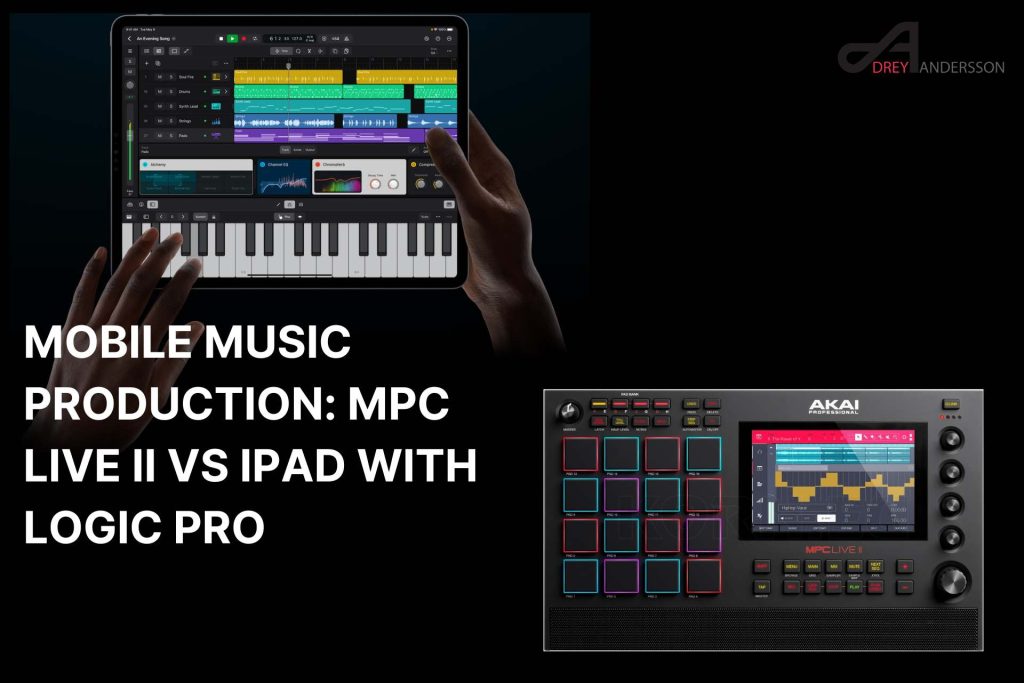
Prior to the launch of Logic Pro for iPad, I was eagerly anticipating the MPC Live II. However, at present, I find immense satisfaction in using Logic Pro on my iPad. I think the strongest competitor is the MPC Live II with a very similar price. These two powerhouses are offering a range of features that make creating music on the go a breeze. But which one is the best fit for you? Let’s dive in and find out.
What is Mobile Music Production?
Mobile music production is the process of creating music using portable devices such as tablets, smartphones, and dedicated music production hardware. It allows musicians and producers to create music wherever inspiration strikes, without being tied to a traditional studio setup. Especially with devices like iPad and decicated music production hardware
MPC Live II: An Overview
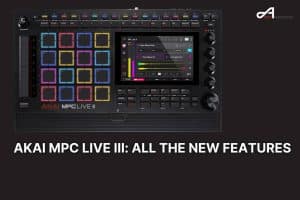
The MPC Live II is a standalone music production center from Akai, a company renowned for its contributions to electronic music. It’s a portable powerhouse that offers a range of features designed to enhance your music production process.
Features of MPC Live II
The MPC Live II boasts 16 velocity- and pressure-sensitive pads, each encircled by RGB LEDs, a seven-inch multitouch display, and an assortment of buttons for transport and other functions. It also features a large data knob and four smaller multifunctional Q-Link knobs. These interface elements are combined in various ways to manage drum kits, software instruments, pattern and song creation, sampling, and audio and MIDI inputs and outputs.
Pros and Cons of MPC Live II
The MPC Live II is praised for its robust features, portability, and the ability to work without a computer. However, it’s not as lightweight as some other mobile music production devices, and its interface may take some time to get used to. Directly compared with an iPad it’s a lot heavier.
iPad Pro with Logic Pro for iPadOS: An Overview
The iPad Pro with Logic Pro for iPadOS is a powerful combination that brings professional music production capabilities to the iPad. Logic Pro for iPadOS is a mobile version of Apple’s renowned Logic Pro X software, offering a range of features that make it a powerful tool for mobile music production.
Features of Logic Pro for iPadOS
Logic Pro for iPadOS offers a range of features including a multi-track mixer, a range of virtual instruments, audio recording and editing capabilities, and a suite of professional-grade effects. It also supports MIDI input and has a user-friendly interface that makes it easy to create music on the go.
Pros and Cons of Logic Pro for iPadOS
The iPad Pro with Logic Pro for iPadOS is praised for its user-friendly interface, powerful features, and the ability to work seamlessly with other Apple devices and software. However, it’s more expensive than some other mobile music production options, and it may not offer as much flexibility as standalone devices like the MPC Live II.
Comparing MPC Live II and iPad Pro with Logic Pro for iPadOS
Ease of Use
Both the MPC Live II and the iPad Pro with Logic Pro for iPadOS have user-friendly interfaces, but they each have their unique learning curves. The MPC Live II’s interface is more hardware-focused, with physical buttons and knobs playing a significant role in the workflow. On the other hand, Logic Pro for iPadOS relies heavily on the iPad’s touchscreen, making it a more intuitive choice for those accustomed to working on touch devices.
Functionality
When it comes to functionality, both devices offer a wealth of features. The MPC Live II shines with its tactile pads and knobs, standalone capability, and robust sampling and sequencing features. On the other hand, Logic Pro for iPadOS offers a comprehensive suite of virtual instruments, professional-grade effects, and seamless integration with other Apple devices and software.
Portability
In terms of portability, both devices are designed to be used on the go. The MPC Live II is a standalone device, meaning it doesn’t require a computer to function. It also has a built-in battery and even some small speakers, allowing you to produce music anywhere. The iPad Pro, on the other hand, is incredibly slim and lightweight, making it easy to carry around. The iPad has also built in stereo speakers, a large battery and if I remember right it outperforms the MPC Live II in terms of battery time.
Price
Price is another important factor to consider. The MPC Live II is generally more expensive than the Logic Pro for iPadOS solution. It costs about $1299 compared to an iPad Pro which costs at the time I write this blog post $799. Also bare in mind that the iPad Pro offers more than just music production capabilities, serving as a powerful tablet for a range of tasks.
While Logic Pro for iPad brings a suite of professional music production tools to your fingertips, it’s crucial to remember that this software comes with a price tag. As of the current listing on the Apple App Store, Logic Pro for iPad is priced at $5 a month or . This cost represents an investment into a comprehensive, high-quality music production environment that has been tailored for the convenience of iPad users.
Conclusion
In conclusion, both the MPC Live II and the iPad Pro with Logic Pro for iPadOS are powerful tools for mobile music production. The best choice depends on your specific needs, budget, and personal preference. If you prefer a tactile, hardware-focused workflow and need a standalone device, the MPC Live II is a great choice (it’s also the usual centerpiece of a DAWless setup). If you prefer a touch-based workflow and need a device that can do more than just music production, the iPad Pro with Logic Pro for iPadOS is worth considering. Following the release of Logic Pro for iPad, this solution has emerged as my clear winner, especially considering that I’ve been an iPad Pro user sincethe last few years.
FAQs
1. Can I use other music production apps on the iPad Pro?
Yes, the iPad Pro supports a wide range of music production apps, not just Logic Pro for iPadOS.
2. Does the MPC Live II require any additional equipment to function?
No, the MPC Live II is a standalone device and doesn’t require a computer or any other equipment to function.
3. Can I use the MPC Live II as a MIDI controller?
Yes, the MPC Live II can function as a MIDI controller when connected to a computer.
4. Can I connect external instruments to the iPad Pro with Logic Pro for iPadOS?
Yes, with the appropriate adapters, you can connect a range of external instruments to the iPad Pro.
5. Which device is better for beginners?
Both devices have their learning curves, but the iPad Pro with Logic Pro for iPadOS might be more intuitive for those who are already familiar with touch devices.