

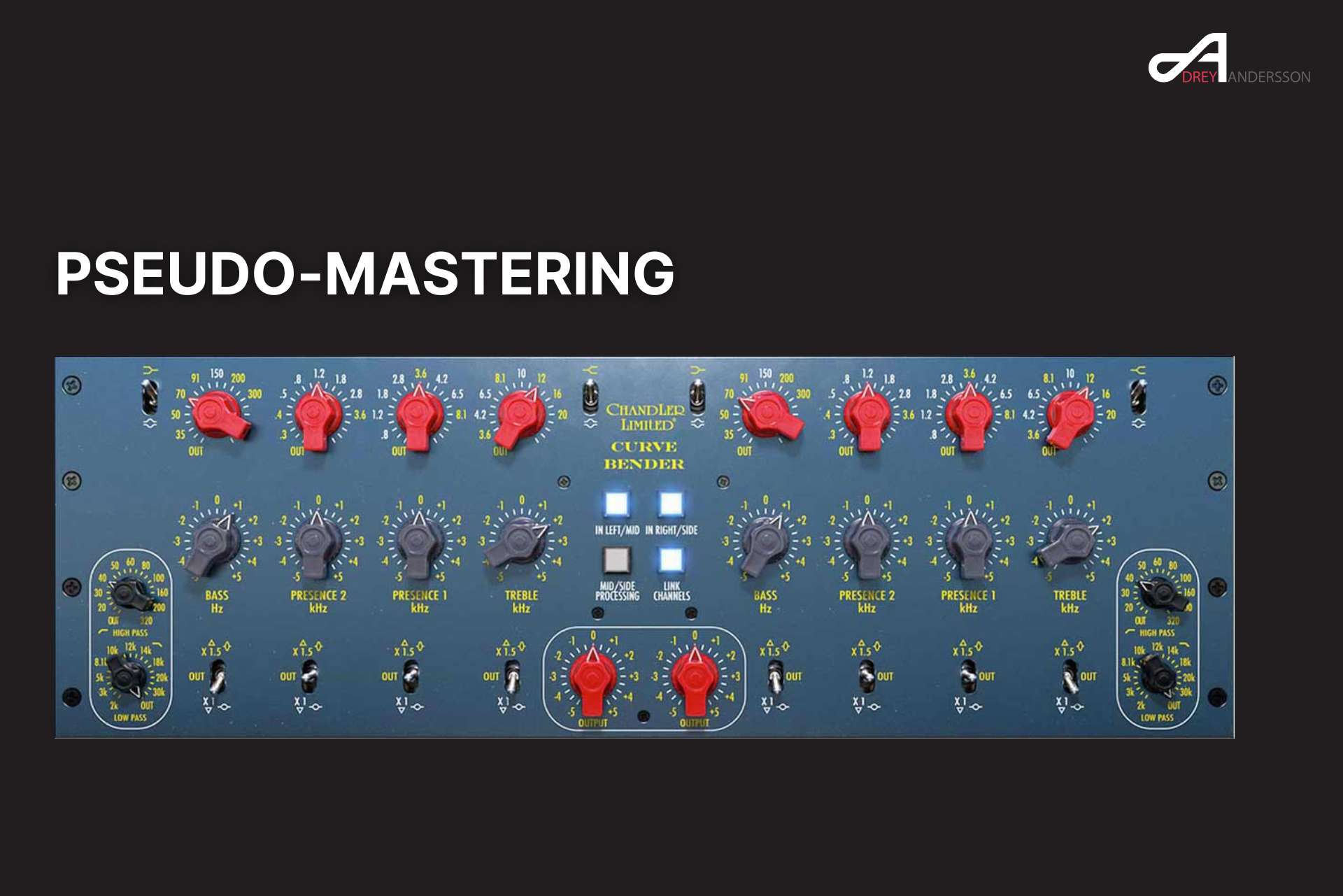
In the world of music production and audio engineering, pseudo-mastering, often also referred to as ‘pre-treatment,’ refers to the process where mixing engineers apply a preliminary, somewhat superficial, mastering treatment to their mixdowns prior to the official, professionally executed mastering phase. The rationale behind this approach is to offer a reasonably realistic preview of how the final mastered track is expected to sound, and it’s commonly done to give clients, such as artists, producers, or record labels, an idea of the final product during the production phase.
This process usually entails applying specific effects and techniques that are typically reserved for the mastering stage. These may include adjustments to the overall volume level, applying equalization to balance the frequency spectrum, and adding compression or limiting to control dynamic range and ensure consistent volume across the track. In a sense, it’s a rough and ready way of providing an ‘enhanced mix’ that sounds closer to a final, release-ready song.
However, it’s important to note that while pseudo-mastering can offer a general representation of the end product, it may not always reflect the true potential of a song or do it full justice. This is because the process of mastering is a precise and nuanced one, requiring specialized knowledge, finely tuned ears, and high-end audio equipment – attributes a dedicated mastering engineer brings to the table.
Moreover, pseudo-mastering can inadvertently limit the creative and technical possibilities available during the actual mastering process. For instance, if the pseudo-mastered mix is too loud or if the effects applied during pseudo-mastering are too heavy-handed, it can leave little room for the mastering engineer to make further enhancements. This can lead to issues like distortion, overcompression, or a lack of dynamic range in the final product.
In sum, pseudo-mastering is a controversial practice with its pros and cons. While it can provide an immediate gratification of a louder, ‘polished’ mix, it can potentially constrain the final, more refined mastering phase. Therefore, its use should be considered with caution and open communication between all parties involved in the production process.
Back to Music Production Terms Index Page