What does DAWless mean?
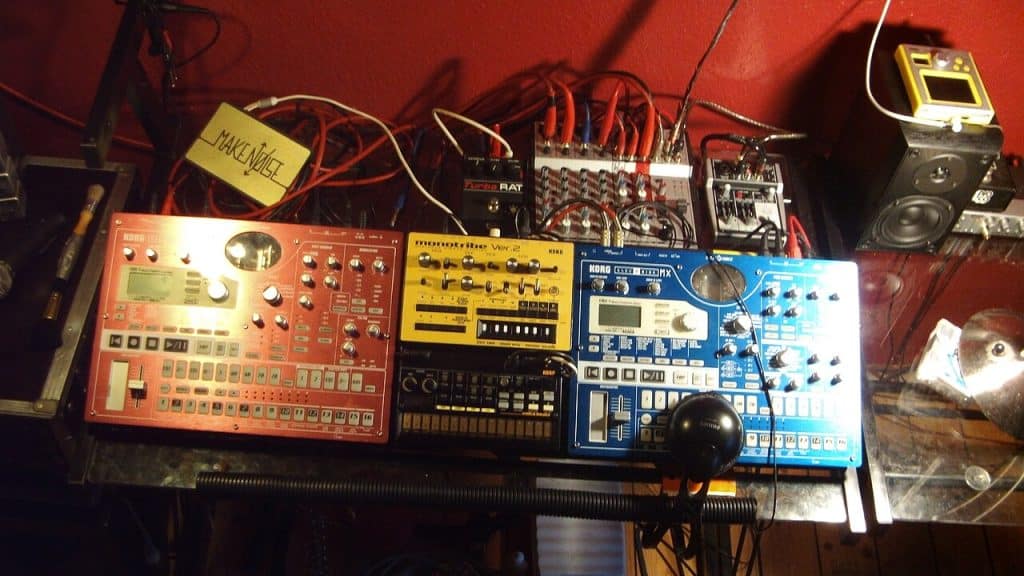
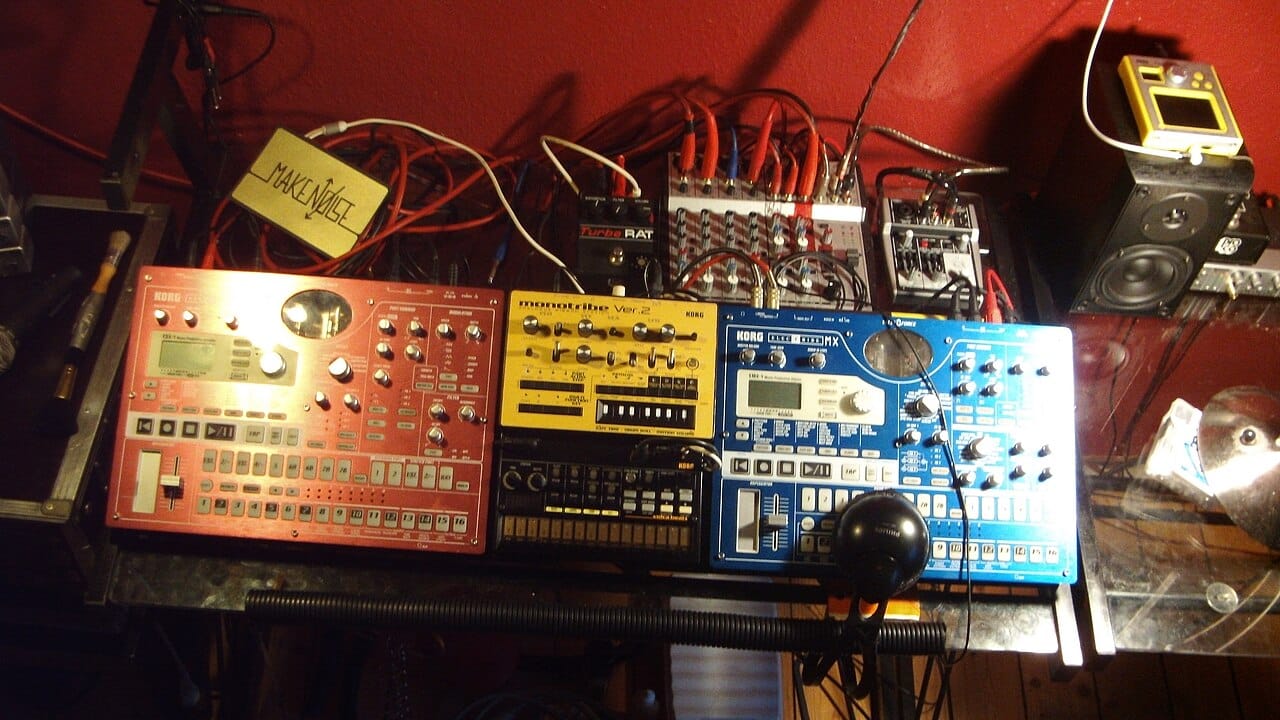
DAWless means making electronic music on hardware without a computer DAW at the center of the setup. It’s “a mildly clumsy expression for making electronic music without a computer”, as Rory Dow put it in Sound On Sound in 2020 (Sound On Sound, November 2020). A hardware sequencer or groovebox takes the DAW’s place, and the music happens on knobs and pads instead of a screen.
The word is built from DAW, the digital audio workstation, plus “-less”. It doesn’t mean a setup with no computer chips at all, since a Digitakt or an MPC is a computer inside. It means no laptop running Ableton, Logic or FL Studio as the brain. The word gets used loosely, too. “‘DAWless’ has become a slippery term,” James Langley wrote in MusicTech in July 2026. It can mean “a table full of hardware” or “a DAW-like experience compressed into a standalone device” (MusicTech, Thingstone Track8 review, July 2026).
- DAWless means making music on hardware, with a sequencer or groovebox as the brain instead of a computer DAW.
- In my Google Trends pull, the yearly average search interest in “dawless” grew 5.2x between 2018 and 2025.
- Every rig has to cover five jobs: sound, sequencing, clock, routing, and mixing plus recording.
- One 5-pin MIDI cable takes 7.36 ms to send a busy downbeat. Separate outputs cut that to 3.2 ms.
Where the word DAWless came from
The earliest dated use I could find is from April 2, 2017. That day, the gear blog MATRIXSYNTH posted a video titled “Dawless Jams with Novation Circuit, Roland Boutique, Roland AIRA” (MATRIXSYNTH, April 2017).
I couldn’t find who coined it. The habit is much older than the word, of course. Before the computer took over, every studio was DAWless.
“For older readers, this won’t seem like a new thing,” Dow wrote in that 2020 article. He also wrote that anyone on the internet “in the last 10 years” had probably “stumbled across the phrase ‘DAWless jamming'”. By January 2020, XLR8R was explaining a “DAW-less” studio to its readers, “meaning a studio without a computer” (XLR8R, January 2020). In 2022, an Elektronauts forum thread asked “Is Dawless the new Analogue?”, wondering whether the word had become the next gear buzzword (Elektronauts, September 2022).
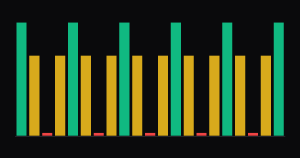
I pulled the full Google Trends history for “dawless” (worldwide, monthly, January 2010 to September 2026) on October 7, 2026. The term first clears Trends’ reporting threshold in October 2017, six months after that MATRIXSYNTH post. Its yearly average then rose from 11.4 in 2018 to 59.5 in 2025, a 5.2x increase. The single busiest month so far was January 2024.
Google Ads puts US volume at about 170 searches a month for “dawless” and about 140 for “dawless setup” (September 2025 to August 2026). August 2026 was the busiest month, with 260. So it’s a niche term. Trends shows it still edging up after the big jump of 2023 and 2024.
What do you need for a DAWless setup?
A DAWless setup needs gear for five jobs that a DAW normally does on its own: making sound, sequencing, keeping time, routing notes and mixing plus recording. One box can cover several of them. Elektron’s Digitakt II offers “16 × stereo or mono audio tracks, or MIDI tracks”, so it can play samples and drive other synths at once (Elektron, Digitakt II).
The brain: sequencers and grooveboxes
The brain is the box that stores the patterns and tells everything else what to play. Track count and MIDI outputs matter most here, because they decide how many other instruments it can run. Here’s what the makers state for some popular choices. (A drum-focused box such as the Korg drumlogue can also be the brain: it has MIDI In and Out and can clock other gear from its own sequencer.)
| Device | Tracks / capacity (maker spec) | MIDI ports | Worth knowing |
|---|---|---|---|
| Elektron Digitakt II | 16 audio or MIDI tracks | In, Out, Thru | DIN Sync out |
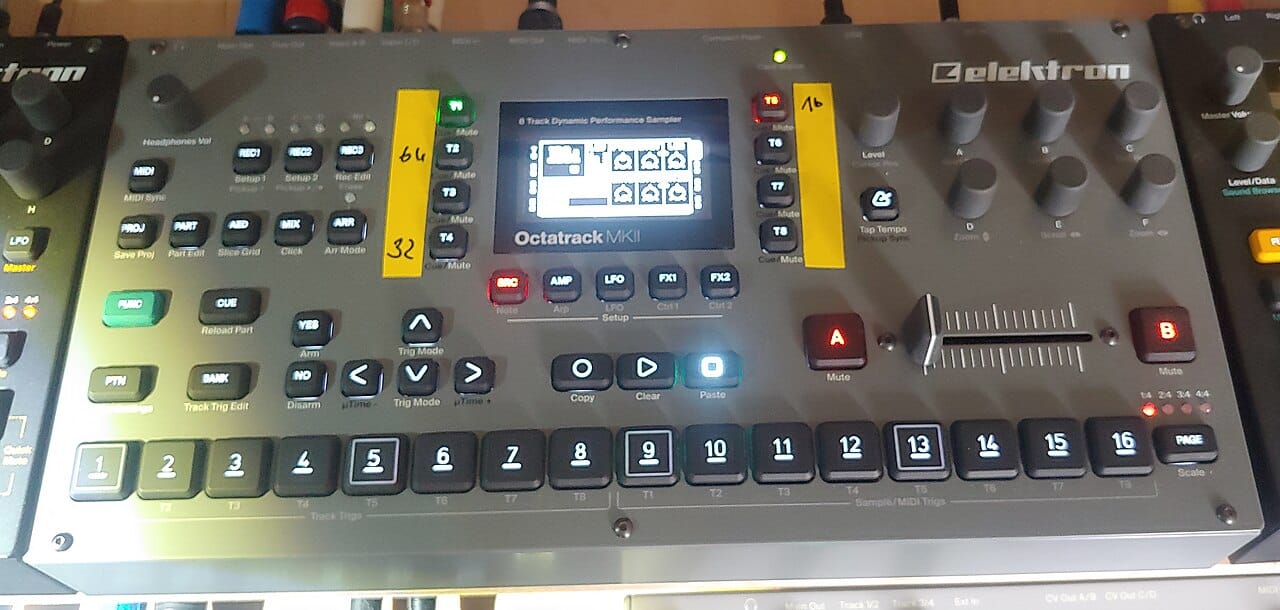
| Elektron Octatrack MKII | 8 audio + 8 MIDI tracks | In, Out, Thru | Track recorder on every audio track |
| Roland MC-707 | 8 tracks | In, Out 1, Out 2 | SD card for projects and audio |
| Novation Circuit Tracks | 2 synth + 4 drum + 2 MIDI | In, Out, Thru | Four hours on battery, 3.5 mm sync out |
| Synthstrom Deluge | Over 2 million notes, RAM-limited | In, Out | Hosts USB MIDI devices, 6+ hours on battery |
Akai’s MPC line is the other big option. A standalone MPC runs as a full sampler workstation with no computer attached. I’ve covered the latest model in my Akai MPC Live III rundown, and the line’s roots in the history of the Akai MPC.
The clock: MIDI clock, sync pulses and Link
Without a DAW, one device has to be the clock master and the rest follow it. MIDI clock is the standard. The MIDI Association says the Timing Clock message is “Sent 24 times per quarter note when synchronization is required” (MIDI Association, Summary of MIDI 1.0 Messages). Start, Stop and Continue messages control the transport, so everything starts together.
Many small boxes also have analog sync jacks. Korg’s volca range has 3.5 mm Sync In and Sync Out jacks (Korg, volca kick specifications). Sound On Sound notes that a Volca “runs at 2ppqn”, meaning two pulses per quarter note, not 24 (Chris Korff, Sound On Sound, January 2023). If the two ends expect different PPQN, the follower runs at the wrong speed.
A third option is Ableton Link, which syncs devices over a local network. Akai’s MPC Live, MPC Live II and MPC One appear on Ableton’s list of Link-enabled products.
Routing: thru chains, merges and USB hosts
MIDI’s own rules shape the routing. The MIDI spec says “One output shall drive one and only one input” (MIDI Association, CA-033 Electrical Specification, 2014). So one output can’t feed two synths through a Y-cable. That needs a thru chain or a splitter, and two controllers feeding one synth need a merger. The spec also warns “there is a limit to the number of devices that can be chained”. It suggests faster opto-isolators “For long chain lengths (more than three instruments)”.
USB is the other trap. Some modern synths only have USB MIDI, and a USB device needs a host, which is normally a computer. A standalone host fixes that. Kenton’s MIDI USB Host connects class-compliant USB gear to 5-pin MIDI “without the use of a computer”, for “up to 4 USB MIDI devices via a USB Hub” (Kenton, MIDI USB Host mk3).
Bigger rigs use a router such as iConnectivity’s mioXL, with “10x USB-MIDI host ports” (iConnectivity, mioXL). For audio, a patchbay does the same job for cables.
Mixing and recording
The last job is getting the jam out of the room. A multitrack recorder-mixer does that without a computer. Zoom’s LiveTrak L-12 offers “14-track simultaneous recording” to SD card (Zoom, LiveTrak L-12). TASCAM’s Model 12 can “Record up to 12 tracks simultaneously to SD card” and adds “5-pin MIDI In/Out ports” for sync (TASCAM, Model 12). Each instrument lands on its own track, so you can still mix later.
The timing cost of one MIDI cable
In my model of a busy four-instrument downbeat, one shared 5-pin cable needs 7.36 ms to deliver every note. That’s because MIDI sends one byte every 320 microseconds. The MIDI spec counts “a total of 10 bits for a period of 320 microseconds per serial byte” at 31.25 kbaud (MIDI Association, CA-033). A note-on is three bytes, so each one takes 0.96 ms to leave the cable. In a DAWless rig, every note on a shared cable waits its turn.
I modelled a typical four-instrument downbeat: kick, snare and hat on the drum machine, one bass note, a four-note pad chord, one lead note and the clock tick that lands on the same beat. On one shared cable that’s 23 bytes, which takes 7.36 ms to send. Running status saves bytes: back-to-back messages of the same type on the same channel send the status byte only once. Without running status, the same downbeat is 28 bytes and 8.96 ms. I put the clock byte last for simplicity; its position doesn’t change the total. Give each instrument its own output, and the slowest part (the pad) finishes after 3.2 ms. In 7.36 ms, sound travels about 2.5 m through air.
None of this is news. Sound On Sound’s Martin Walker made the same point in October 2002: notes leave a cable one after another, so “a six-note chord will emerge over six milliseconds” (Sound On Sound, The Truth About Latency).
The thru port matters too. In a 1993 Sound On Sound article, Martin Russ put a hardware thru at about half a microsecond of delay. A soft thru, handled in software, added about a millisecond (Martin Russ, Sound On Sound, March 1993).
So what’s the practical lesson? If your groovebox has two MIDI outs, use both. Put the drums and the chords on different cables. A multi-port interface or router spreads the load further. And clock is cheap: at 120 BPM, 48 clock bytes a second use about 1.5% of a cable’s time.
Why do producers go DAWless?
For many producers, DAWless is a way to get away from the screen. “You may not realize how much visual distraction your computer screen is causing until you remove it from the equation,” TASCAM wrote in a February 2024 guide (TASCAM Learn). Hands on knobs, with no mouse and no menus, feels more like playing an instrument than editing a file.
YouTuber BoBeats told MusicTech much the same in 2022: “Screens dominate their life, and DAWless electronic music is akin to picking up a guitar and jamming after a long day of work” (MusicTech, December 2022). Portability is the other draw. “DAWless equals portability,” producer Martin Roth told Native Instruments in 2025 (Native Instruments Blog, April 2025). A battery-powered groovebox plays without booting a laptop, and a live set needs no laptop on stage.
What are the downsides of going DAWless?
The big downsides are editing, arranging and recording. A hardware setup stays fun until “the point where you need to record something”, MusicTech’s 2026 review warned. Then “a promising loop collapses into cable-swapping, menu-diving, or another evening in the DAW”.
Arranging is the other weak spot. “There is no widely accepted protocol for changing song parts in sequencers,” Sound On Sound noted in 2020.
In a DAW, arrangement and automation are lanes you can drag around. In hardware, song mode differs from box to box, and you often play the arrangement live. There’s no global undo across five devices. Cost adds up too, because each job needs its own box and its own cables.
Hum is the other classic problem. Every device has its own power supply and audio ground, and more of them means more chances for a ground loop. MIDI itself is safe here: the spec isolates every MIDI input with an opto-isolator “To avoid ground loops, and subsequent data errors”. Audio cables and USB connections don’t get that protection, so that’s where to look first.
How do you start a DAWless setup?
Start with one brain and one or two sound sources, not a full table. A single groovebox like the Circuit Tracks already has two synth tracks, four drum tracks and two MIDI tracks for outside gear (Novation). That covers sound, brain and clock in one box. Add gear only when you hit a real limit.
- Pick the brain. Choose the box whose sequencer you enjoy. You’ll touch it more than anything else.
- Add one external synth. Connect the brain’s MIDI out to the synth’s MIDI in and set both to the same channel.
- Decide the clock master. Usually that’s the brain. Set every other device to follow external clock, and check its PPQN if it uses sync pulses.
- Give heavy parts their own cable. Drums and chords on separate outputs keep the downbeat tight, as my calculation above shows.
- Mix into a recorder. A multitrack recorder-mixer keeps each instrument on its own track for later.
- Record every jam. Many DAWless producers still finish tracks on a computer. That’s fine. The writing happened on the hardware.
That last step is the honest version of DAWless for many people. Jam on hardware, then edit the best take in a DAW. A good music production workflow uses each tool for what it’s best at. If you’re weighing a standalone sampler against a tablet, my MPC Live II vs Logic Pro for iPad comparison covers that choice.
Frequently asked questions
What does DAWless mean in music?
DAWless means making electronic music on hardware without a computer DAW like Ableton or Logic. A sequencer or groovebox runs the patterns, and synths and drum machines make the sound. Sound On Sound called it “a mildly clumsy expression for making electronic music without a computer”. The earliest dated use I found is from April 2017.
Is DAWless better than using a DAW?
Neither is better. They suit different jobs. DAWless is faster for jamming and live sets, and it keeps you off the screen. A DAW wins at editing, arranging and mixing. Many producers combine them: jam on hardware, record the takes, then edit in a DAW. A TASCAM Model 12 records 12 tracks to SD card for later editing.
Do you need a computer at all for DAWless?
No. A brain, sound sources and a recorder can do everything. The tricky part is USB MIDI gear, which usually expects a computer as its host. A standalone host such as Kenton’s MIDI USB Host solves that, connecting up to 4 USB MIDI devices through a USB hub, with no computer involved.
How do you sync gear in a DAWless setup?
Choose one clock master and set every other device to follow it. MIDI clock sends 24 pulses per quarter note, plus Start and Stop messages. Some compact gear also has analog sync jacks, and Sound On Sound notes that a Korg Volca runs at 2 ppqn. Mismatched PPQN makes gear play at the wrong speed.
How many devices can you chain with MIDI thru?
The MIDI spec gives no hard number but warns of “a limit to the number of devices that can be chained”. It says faster opto-isolators should help for chains of more than three instruments. A thru chain also shares one cable, at one byte per 320 microseconds, so a MIDI router with separate outputs is safer for big rigs.
Back to Music Production Terms Index Page